EN
EN

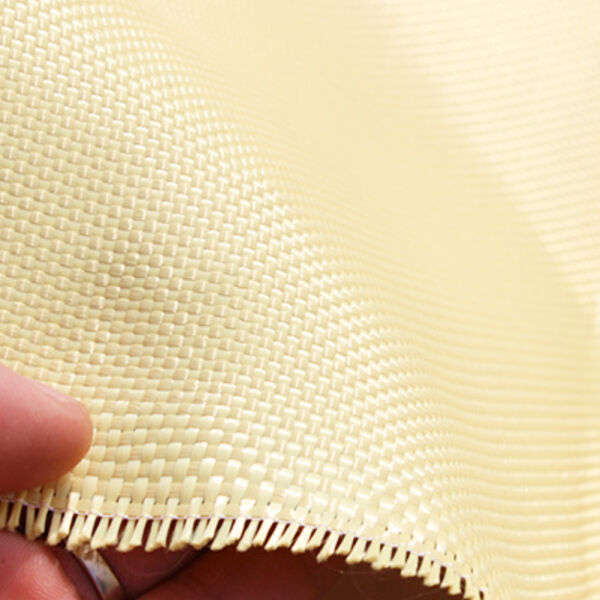
Aramid fiber fabric has revolutionized the composites industry by offering a unique combination of strength, lightweight properties, and thermal resistance that surpasses many traditional reinforcement materials. When engineers and manufacturers seek to create high-performance composite structures for aerospace, automotive, marine, and industrial applications, understanding the specific advantages of aramid fiber fabric becomes crucial for making informed material selection decisions.
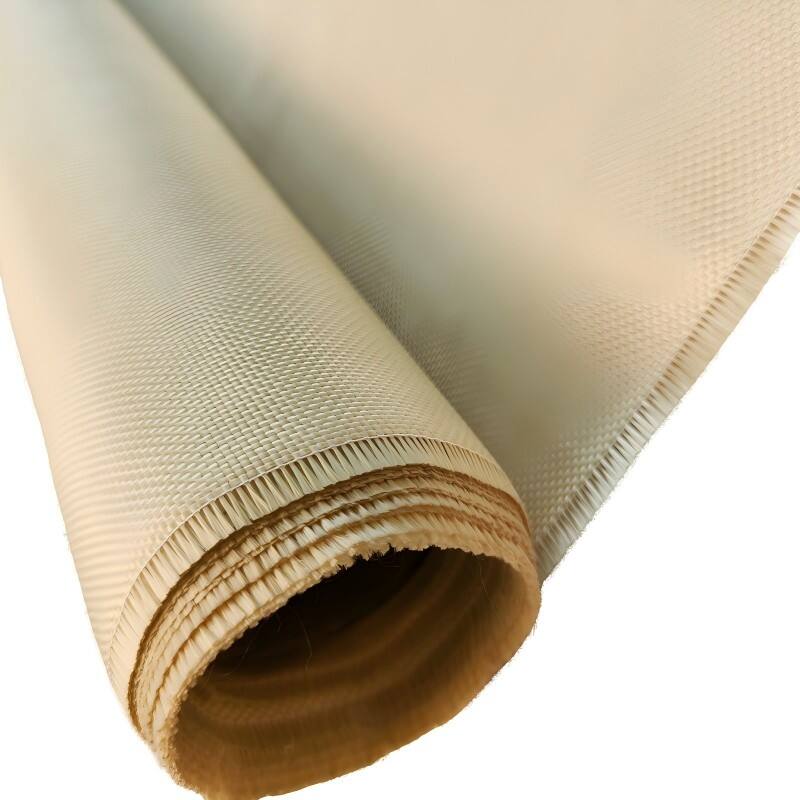
The integration of aramid fiber fabric into composite matrices delivers measurable improvements in impact resistance, fatigue performance, and dimensional stability compared to conventional reinforcement options. These benefits translate directly into enhanced product reliability, extended service life, and reduced maintenance requirements across diverse industrial applications where composite performance is critical to operational success.
Superior Mechanical Performance Characteristics
Exceptional Tensile Strength and Modulus
Aramid fiber fabric exhibits outstanding tensile strength properties that significantly enhance composite performance under load-bearing conditions. The inherent molecular structure of aramid fibers provides tensile strengths ranging from 3,000 to 3,500 MPa, which translates to composites capable of withstanding extreme mechanical stresses without failure. This high tensile strength enables engineers to design lighter structures while maintaining or improving load-carrying capacity.
The modulus of elasticity in aramid fiber fabric composites typically ranges between 70 to 130 GPa, offering excellent stiffness characteristics for structural applications. This combination of high strength and controlled flexibility allows composite structures to respond predictably under various loading conditions, making aramid fiber fabric particularly valuable in applications requiring precise deflection control and structural integrity.
When subjected to cyclic loading conditions, composites reinforced with aramid fiber fabric demonstrate superior fatigue resistance compared to glass fiber alternatives. This enhanced fatigue performance extends component service life and reduces the frequency of maintenance interventions, providing significant operational cost advantages in critical applications such as pressure vessels and rotating machinery components.
Outstanding Impact Resistance Properties
The impact resistance of aramid fiber fabric reinforced composites represents one of the most significant advantages over traditional reinforcement materials. The fiber's ability to absorb and distribute impact energy prevents catastrophic failure modes, making these composites ideal for protective applications and structures exposed to dynamic loading conditions.
Ballistic testing has consistently shown that aramid fiber fabric composites can absorb up to 35% more impact energy than equivalent glass fiber composites before reaching failure thresholds. This enhanced energy absorption capability results from the unique fiber architecture and intermolecular bonding characteristics that allow controlled deformation rather than brittle fracture under impact conditions.
The damage tolerance of aramid fiber fabric composites ensures that localized impact damage does not propagate rapidly through the structure, maintaining overall structural integrity even when individual fibers or small areas experience damage. This characteristic is particularly valuable in aerospace and automotive applications where impact resistance directly relates to safety performance requirements.
Thermal and Environmental Stability Advantages
High Temperature Performance
Aramid fiber fabric maintains its mechanical properties across a wide temperature range, typically from -196°C to 200°C, making it suitable for applications experiencing extreme thermal environments. The thermal stability of aramid fiber fabric ensures that composite structures retain their strength and dimensional accuracy even under elevated temperature conditions that would degrade other synthetic fiber reinforcements.
The glass transition temperature of aramid fiber fabric composites remains significantly higher than that of glass fiber composites, allowing continued structural performance at temperatures where conventional reinforcements begin to lose effectiveness. This thermal performance advantage translates to improved safety margins and expanded operational envelopes for composite components in high-temperature applications.
Heat deflection temperatures for aramid fiber fabric composites typically exceed 180°C depending on the matrix system used, providing engineers with greater design flexibility when specifying materials for thermally demanding applications. The combination of retained strength at elevated temperatures and low thermal expansion coefficients ensures dimensional stability across varying thermal cycles.
Chemical Resistance and Durability
The chemical inertness of aramid fiber fabric provides excellent resistance to most acids, bases, and organic solvents commonly encountered in industrial environments. This chemical stability ensures long-term performance in corrosive atmospheres where metal components would require protective coatings or frequent replacement due to degradation.
Moisture absorption rates for aramid fiber fabric are significantly lower than natural fiber alternatives, reducing the risk of dimensional changes and strength degradation in humid environments. The hydrophobic nature of aramid fibers helps maintain consistent mechanical properties across varying humidity conditions, which is essential for precision applications requiring stable performance characteristics.
UV resistance testing demonstrates that aramid fiber fabric composites maintain their structural integrity and appearance longer than many alternative reinforcement options when exposed to prolonged sunlight exposure. While some surface degradation may occur over extended periods, the bulk properties of the composite remain largely unaffected, ensuring continued structural performance throughout the component's service life.
Weight Reduction and Design Flexibility Benefits
Low Density Advantages
The density of aramid fiber fabric, typically around 1.44 g/cm³, provides significant weight savings compared to glass fiber reinforcement at 2.54 g/cm³. This density advantage becomes particularly important in transportation applications where weight reduction directly translates to improved fuel efficiency and enhanced payload capacity.
Weight savings of 20-30% are commonly achieved when substituting aramid fiber fabric for equivalent glass fiber reinforcement in structural composites. These weight reductions enable designers to allocate saved weight to other performance-enhancing features or to achieve overall system weight targets that would be impossible with heavier reinforcement materials.
The strength-to-weight ratio of aramid fiber fabric composites exceeds that of many metallic alternatives, enabling the replacement of traditional metal components with lighter composite alternatives without sacrificing structural performance. This substitution capability opens new design possibilities in weight-critical applications such as aerospace components and automotive body panels.
Formability and Processing Characteristics
Aramid fiber fabric exhibits excellent drapability and conformability, allowing complex three-dimensional shapes to be formed without fiber wrinkling or bridging that can compromise composite quality. This formability characteristic enables the production of intricate component geometries that would be difficult or impossible to achieve with rigid reinforcement materials.
The processing temperature requirements for aramid fiber fabric composites are typically lower than those required for carbon fiber systems, reducing energy consumption during manufacturing and minimizing thermal stress development within the cured composite. These lower processing temperatures also expand the range of compatible matrix systems and processing equipment options available to manufacturers.
Cutting and handling characteristics of aramid fiber fabric facilitate efficient manufacturing processes, with reduced tool wear and consistent edge quality compared to abrasive reinforcement alternatives. The fiber's resistance to mechanical damage during handling helps maintain fabric integrity throughout the manufacturing process, contributing to consistent composite quality and performance.
Cost-Effectiveness and Lifecycle Value
Manufacturing Efficiency Benefits
The compatibility of aramid fiber fabric with various manufacturing processes, including hand lay-up, resin transfer molding, and vacuum assisted resin transfer molding, provides manufacturers with flexibility in production method selection based on volume requirements and quality specifications. This process versatility helps optimize manufacturing costs while maintaining consistent product quality.
Reduced scrap rates during manufacturing result from the damage resistance and handling characteristics of aramid fiber fabric, contributing to improved material utilization efficiency and lower overall production costs. The fiber's resistance to fraying and edge delamination during cutting operations minimizes waste and reduces the need for secondary processing operations.
Tool life improvements are commonly observed when processing aramid fiber fabric composites due to the non-abrasive nature of the reinforcement material. Extended tool life reduces machining costs and improves dimensional consistency across production runs, contributing to overall manufacturing cost reductions and improved part quality.
Long-Term Performance Value
The durability characteristics of aramid fiber fabric composites result in extended service intervals and reduced maintenance requirements compared to traditional materials. This longevity translates to lower lifecycle costs through reduced replacement frequency and decreased downtime for maintenance activities.
Corrosion immunity eliminates the need for protective coatings and associated maintenance procedures required for metallic alternatives, providing significant cost savings over the component's operational lifetime. The absence of galvanic corrosion concerns also simplifies design requirements when aramid fiber fabric composites are used in multi-material assemblies.
Energy efficiency improvements in transportation applications result from weight reduction benefits, providing ongoing operational cost savings that can offset higher initial material costs over the component's service life. These operational savings often justify the selection of aramid fiber fabric composites based purely on economic considerations, even without considering performance benefits.
FAQ
How does aramid fiber fabric compare to carbon fiber in composite applications?
Aramid fiber fabric offers superior impact resistance and damage tolerance compared to carbon fiber, making it preferable for applications where impact resistance is critical. While carbon fiber provides higher stiffness and thermal conductivity, aramid fiber fabric delivers better toughness and fatigue resistance at a lower cost point, making it suitable for applications where moderate stiffness requirements can be balanced against improved durability characteristics.
What are the limitations of using aramid fiber fabric in composites?
Aramid fiber fabric has lower compressive strength compared to its tensile strength, which may limit its use in applications with significant compressive loading. Additionally, aramid fibers can be challenging to machine due to their tough, fibrous nature, potentially requiring specialized cutting tools and techniques. The material also has limited high-temperature performance compared to ceramic fibers, with continuous use temperatures generally limited to around 200°C.
Can aramid fiber fabric be combined with other reinforcement materials in hybrid composites?
Yes, aramid fiber fabric works exceptionally well in hybrid composite configurations when combined with glass or carbon fibers. Hybrid designs can optimize specific performance characteristics by placing aramid fiber fabric in areas requiring high impact resistance while using other fibers where different properties are prioritized. This approach allows engineers to tailor composite properties to specific loading conditions while maintaining cost-effectiveness.
What manufacturing considerations are important when working with aramid fiber fabric?
When processing aramid fiber fabric, manufacturers should use sharp cutting tools specifically designed for synthetic fibers to prevent fraying and ensure clean edges. The fabric requires careful handling to maintain fiber alignment and prevent damage during lay-up operations. Proper resin selection and curing parameters are essential to achieve optimal fiber-matrix bonding, and manufacturers should consider the fabric's sensitivity to UV exposure during storage and handling to maintain material properties.
Table of Contents
- Superior Mechanical Performance Characteristics
- Thermal and Environmental Stability Advantages
- Weight Reduction and Design Flexibility Benefits
- Cost-Effectiveness and Lifecycle Value
-
FAQ
- How does aramid fiber fabric compare to carbon fiber in composite applications?
- What are the limitations of using aramid fiber fabric in composites?
- Can aramid fiber fabric be combined with other reinforcement materials in hybrid composites?
- What manufacturing considerations are important when working with aramid fiber fabric?